AQA Chemistry Paper 1: Topics and Exam Guide 2026
- Assignment Task Blog
- Oct 17, 2026
- Assignment
Are you appearing for the GCSE Chemistry exam in the current year, 2026? Are you worried about the AQA GCSE Chemistry Paper 1 topics? Then you should start revising the AQA Chemistry Paper 1 topics as early as possible and in the best way. We will discuss AQA GCSE Chemistry Paper 1 topics for 2026. If you need extra academic support with chemistry concepts and assignments, Chemistry Assignment Help can help you strengthen your understanding and prepare more effectively.
Paper 1 weighs about 50% of your overall GCSE Chemistry grade. Thus, you always need to understand properly what is included and how to prepare for each of the sections. In this blog, we will discuss AQA Chemistry Paper 1: Topics & Exam Guide 2026.
Need help with chemistry-related subjects? Get expert guidance to understand complex concepts and improve your academic performance with reliable chemistry assignment help.
What is AQA GCSE Chemistry Paper 1?
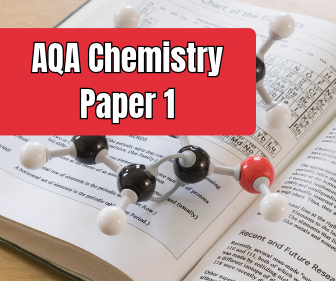
AQA GCSE Chemistry Paper 1 is the first of the 2 written papers that make up your GCSE Chemistry qualification. It assesses topics 1 and 5 of any specification and also includes a mix of multiple-choice questions, calculations, short-answer questions, as well as extended response work.
Since this paper counts for 50% of your overall chemistry grade, you need a very clear understanding of the exam format.
AQA GCSE Chemistry Paper 1: Exam Format and Key Details
The Chemistry Paper 1 exam format is explained below:
| Exam Board | AQA |
| Specification Code | 8462/1H (Higher) / 8462/1F (Foundation) |
| Duration | 1 hour 45 minutes |
| Total Marks | 100 |
| Weighting | 50% of the GCSE Chemistry |
| Types of Questions | Multiple choice, structured, extended, short answer, etc. |
| Calculator | Allowed |
| Tier | Foundation tier and higher tier |
Paper 1 covers topics 1 and 5 of the AQA specification, while Paper 2 assesses topics 6 and 10.
The content format of these 2 papers is separate. This means everything discussed in the guide is related to Paper 1, and the needed topics are to be revised for the exam.
Preparing for your chemistry exams?
Explore our comprehensive exam guides, revision tips, and study resources to boost your confidence and achieve better results.
Complete List of AQA GCSE Chemistry Paper 1 Topics
Topic 1. Atomic Structure and the Periodic Table
This is the foundation of everything in chemistry. Here, you need to exit the question on the topic across both the short as well as extended response sections. The key subtopics here are as follows:
-
Element, compound, mixture, atoms
-
History of the atom by nel both, Dalton model
-
How to separate mixtures by using various methods like distillation, filtration, or chromatography
-
Mass number, isotopes, isotones, atomic number
-
Electron, neutron, proton
-
Electronic structure and the energy levels
-
Explaining the periodic table
-
Trends in the reactivity of the alkali metals in Group 1
-
Displacement reactions and the properties of halogens in Group 7
-
The noble gases in Group 0
-
The transition and the bridge elements in the higher tier
Topic 2. Bonding, Structure and the Properties of Matter
This is one of the most important topics in the AQA GCSE Chemistry Paper 1 topics list. Students often get fewer marks here because they can describe chemical bonding but cannot explain why and how properties differ. The AQA Chemistry Paper 1 topics are as follows:
-
Particle diagrams and the states of matter
-
Ionic compounds and bonding
-
Giant ionic lattice structures
-
Fullerenes, diamond, graphite and graphene
-
Covalent bonding of basic molecules and the big covalent structures
-
Types of alloys and their uses
-
Metallic bonding with properties of metals
-
The uses and risks of nanoparticles
-
Different types of polymer structures

Struggling with GCSE Chemistry exam paper topics?
Topic 3. Quantitative Chemistry
Here, there is a lot of application of maths. In this paper, I will practice various numerical calculations in fields of yield, moles, and atom economy. The key subtopics are as follows:
-
The relative atomic mass Ar and the formula mass Mr
-
Solutions concerning mol/dm3
-
The mol calculations by using moles
-
Theoretical yield and the percentage yield
-
Excess reactants and the limiting reactants
-
Atom economy
-
Volumes of the gases at room temperature and normal pressure
-
How to use moles to balance the chemical equations
-
The higher-tier titration calculations
-
The higher tiers include calculating concentrations, using titration results to calculate concentrations, and using moles in calculations for various chemical reactions.
Topic 4. Chemical Changes
This is one of the most significant AQA chemistry topics in the first year of chemistry. It covers electrolysis, acids, reactivity, etc. The subtopics are as follows:
-
The reactivity series of the metals
-
Metal extraction, electrolysis and reduction
-
Reactions of Various metals with oxygen, water and acids
-
PH scale, acids and alkalis
-
Oxidation and reduction
-
Principles and examples of electrolysis
-
Reaction of various acids with metal oxides, metals, metal carbonates and metal hydroxides
-
Electrolysis of aqueous solutions
-
Making of the salt precipitation and the neutralization
-
Electrolysis of the molten compounds
Topic 5. Energy Changes
-
Definitions and examples of various endothermic and exothermic reactions
-
The reaction profile energy diagrams
-
Energy changes in temperature changes and the reactions
-
Role of catalysts in the activation of energy
-
The pros and cons of fuel cells and hydrogen fuel cells
-
The bond energy calculations by using the energies to determine if a reaction is endothermic or exothermic
-
Explain Haber's process in an exothermic reaction
AQA Chemistry Paper 1: Key Skills You Need to Master
-
AQA Chemistry Paper 1 revision skills: it includes mole calculations by converting the mass to moles, as well as the concentration equation at the early part.
-
Practice like exam questions: you always need to know the variables (dependent and independent), safety, the equipment list, and the evaluation steps.
-
Active recall: use flashcards for key terminology and definitions rather than just reading.
-
Using past papers: you can do this diagnostically yourself. Review all the weak subtopics by using various resources, both online and offline.
AQA Chemistry Paper 1 vs Paper 2: Key Differences Explained
| Feature | Paper 1 | Paper 2 |
|---|---|---|
| Topic Covered | 1-5 are covered | 6-10 are covered |
| Focus | bonding, atoms, energy, and reactions | organic chemistry, rates, atmosphere, resources, and analysis |
| Marks | 100 | 100 |
| Duration | 1 hr 45 minutes | 1 hr 45 minutes |
| Weighting | 50% of GCSE | 50% of GCSE |
Foundation vs Higher Tier: What's the Difference?
-
Foundation covers the basic electronic structure, while Higher Tier explains trends using electronic shielding.
-
The first is based on the percentage yield, while that of Higher Tier is based on basic mole titration calculations and multi-step mole problems.
-
Foundation involves chemical changes like the redox series and making salts, while the higher tier involves half-equations, aqueous solutions, and electrolysis methods.
-
Foundation includes ionic metallic bonding and covalence, while the higher tier involves bond energy calculations with hydrogen fuel cells and the details of giant covalent structures.
-
Foundation energy changes are exothermic and endothermic, while the higher tier involves high-value bond-energy calculations for various hydrogen fuel cells.
Looking for expert assistance with challenging chemistry assignments? Connect with experienced academic experts for subject-specific guidance and support tailored to your learning needs.
AQA GCSE Chemistry Paper 1 2026: What to Revise
-
The core topics of atomic structure and the periodic table.
-
Group properties, such as the Group 1 alkali metals, Group 0 noble metals, and the Group 7 halogens.
-
GCSE science teacher plus the 2 topics: bonding, structure, and the properties of matter; states of matter, as well as the particle theory
-
Various types of bonding like covalent, ionic and metallic
-
Properties of carbon: the allotropes like diamond and graphite, as well as nanoparticles
-
Quantitative chemistry with the relative formula and the conservation of mass energy.
-
The concept of the mole, balancing equations, limiting reactants, etc.
-
Concentration of solutions with the percentage yield and the atomic energy.
-
The reactivity and the chemical changes with a series of displacement reactions.
-
Acid ratios, like making salts and neutralization, and pH values.
-
Electrolysis with the apparatus and molten salts
-
The energy changes, including the endothermic and exothermic chemical reactions
-
The profile diagrams of the reactions and the bond energy calculations
Common Mistakes Students Make in AQA Chemistry Paper 1
-
The unit conversions: you often forget the cm3 and the dm3, or divide by 1000, or convert the grams to the moles correctly.
-
Students often make the common mistake of limiting the reagents by picking the wrong chemical after the mole calculation, rather than checking the stoichiometric mole ratios.
-
You often make mistakes in the figures or the rounding by over-rounding early in the multi-step calculation or by ignoring the necessary instructions.
-
The mistake of limiting the units by writing the count number and by losing the very final Mark by leaving out the units.
Final Thoughts
Preparing for AQA Chemistry Paper 1 requires a clear understanding of the syllabus, regular revision, and consistent practice. By focusing on key topics and solving practice questions, you can improve your confidence and exam performance. Thus, you can see that writing AQA chemistry topics correctly is not easy. So, you always need the best online assignment help service provider. Assignmenttask.com is the best choice.

Lisa K. Hook